


Digital signage in sports arenas is defined as a network of interconnected displays, LED boards, and video walls that deliver real-time content, advertising, and safety communications across every zone of a venue. The role of digital signage in sports arenas goes far beyond showing scores. It drives fan engagement, generates sponsorship revenue, and keeps operations running safely. Mid-size stadiums deploy 100–500 screens, while major venues exceed 2,000 displays covering LED scoreboards, perimeter ribbon boards, and suite entertainment systems. That scale means every square foot of your venue has a job to do. The industry term for this integrated approach is “venue AV ecosystem,” and understanding it gives you a real edge in planning and ROI.
What is the role of digital signage in sports arenas?
Digital signage in arenas serves three core functions: fan engagement, operational control, and revenue generation. Each function depends on the others. A display network that only shows ads misses the fan experience side. One that only shows scores leaves money on the table.
Stadium displays have evolved from purely informational boards into a primary attraction. Fans arrive at games already accustomed to watching at home with multiple screens, real-time stats overlays, and instant replay. Your venue needs to match or beat that experience. The good news is that a well-planned display network can deliver something a living room never can: a shared, electric atmosphere that 50,000 people feel at the same time.
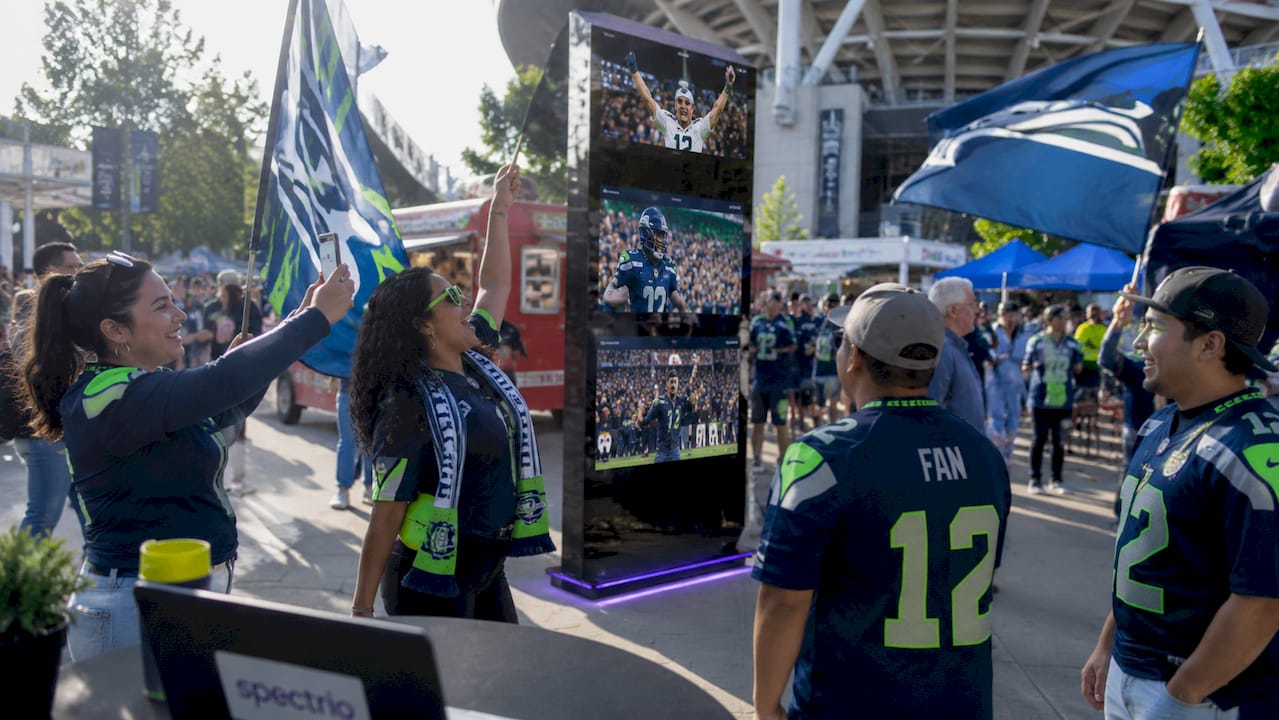
Inter Miami’s Nu Stadium illustrates this well. The venue opened with 26 LED displays focused on visual storytelling and immersive fan engagement throughout the building. That investment signals where the industry is heading. Screens are no longer a luxury addition. They are the foundation of the modern venue experience.
How digital signage enhances fan engagement and in-venue experience
Fan engagement is the most visible benefit of digital screens in stadiums. The right content at the right moment turns a passive spectator into an active participant.
Here is what a well-deployed display network delivers for fans:
- Real-time stats and replays: Large video walls show live player data, speed readings, and instant replays integrated directly into the broadcast feed. Fans now expect real-time stats shaped by years of at-home viewing technology. Delivering that inside the venue removes one of the biggest reasons people stay home.
- Social media walls and fan zones: Dedicated screens in concourses and fan plazas display curated social posts, fan photos, and live polls. This turns passive attendance into active participation and generates organic social buzz your marketing team did not have to pay for.
- Synchronized audio-visual productions: Treating game day as a coordinated production with synchronized lights, video, and audio creates moments that increase fan loyalty and social media sharing. A goal celebration that triggers a light show, a sound burst, and a replay on every screen simultaneously is something no home setup replicates.
- Personalized content in premium areas: Luxury suites and club sections can receive tailored content including player histories, live betting odds, and sponsor messages specific to that audience tier.
- Pre-event and post-event storytelling: Digital signage also serves pre-event and post-event branding functions that are often overlooked. Arrival content, countdown timers, and post-game highlights extend the emotional arc of the visit beyond the final whistle.
Pro Tip: Map your fan’s physical journey from parking lot to seat and identify every display touchpoint. Content that matches where a fan is in that journey, whether arriving, waiting in line, or celebrating a goal, performs significantly better than generic broadcast loops.
Personalized content is the next frontier for venue managers. Research on personalized content strategies shows that matching messaging to audience context drives measurably higher engagement than static or generic content. In an arena, that means different content for the student section, the family zone, and the club lounge, all managed from a single platform.
What operational efficiencies does digital signage deliver in stadiums?
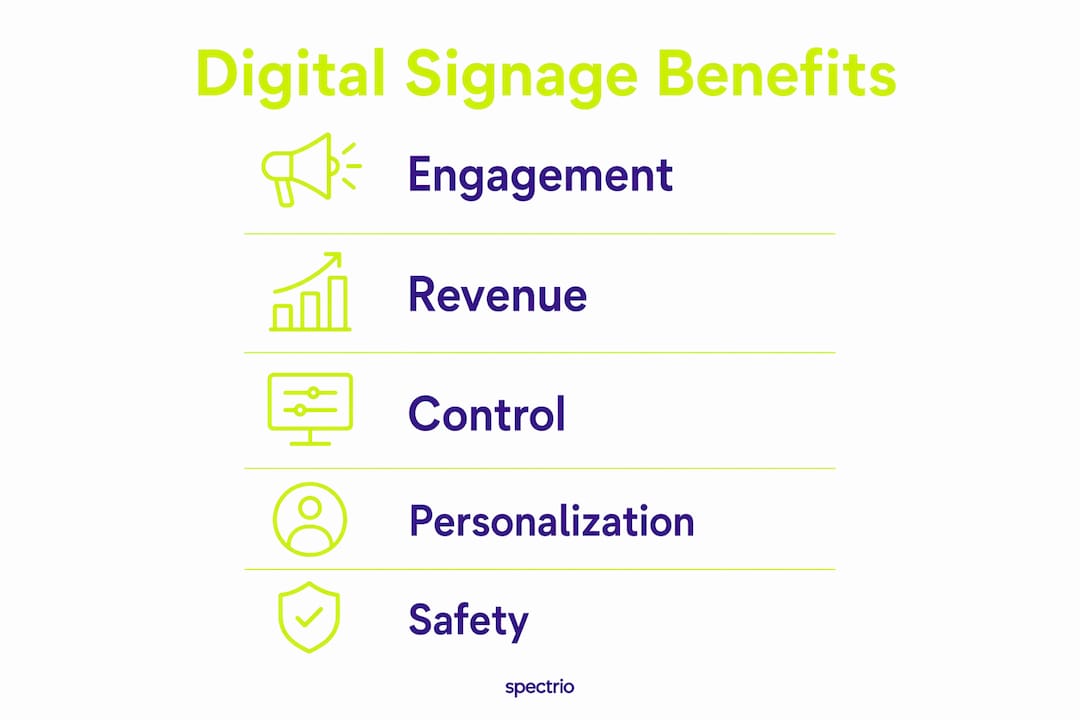
Digital signage solves real operational problems that printed signs and PA announcements cannot. The gains show up in crowd flow, concession revenue, and safety response times.
- Wayfinding and crowd management: Dynamic wayfinding screens direct fans to open gates, less-congested restrooms, and available parking zones. Digital menu boards and wayfinding systems improve fan movement and concession efficiency by providing real-time queue updates. Shorter lines mean happier fans and higher per-cap spending.
- Dynamic concession menu boards: Concession stands can update pricing, availability, and promotions in real time. Sold-out items disappear from the board instantly. Happy hour promotions push automatically at halftime. This reduces staff workload and eliminates the frustration of fans ordering items that are no longer available.
- Emergency override capability: Digital signage functions as an emergency override system, instantly switching every display in the venue to show evacuation routes, assembly points, and safety instructions. This capability is not optional in modern venue design. It is a safety standard that protects both fans and your organization’s liability.
- Tiered content for different audience zones: General admission concourses, VIP clubs, and media areas each receive content appropriate to their audience. A single content management system handles all tiers, reducing the staffing burden of managing multiple systems.
- Advertising campaign scheduling: Perimeter boards and concourse screens run ad rotations that respect broadcast blackout zones and contractual requirements. Automated scheduling removes the manual coordination burden from your operations team.
Stat to know: A mid-size stadium managing 100–500 screens through a unified system can update content across every display simultaneously, a task that would require dozens of staff members if handled manually.
How does digital signage generate revenue and sponsorship value?
Every display in your venue is a revenue asset. The question is whether you are managing it that way.
LED ribbon boards around the pitch are the primary revenue generators in most venues. They carry precise ad rotations that accommodate broadcast windows and sponsor contractual requirements. Sponsors pay premium rates for these positions because they appear in broadcast footage, multiplying their reach far beyond the stadium itself.
Revenue streams that a well-managed display network supports include:
- Broadcast-visible perimeter boards: These command the highest CPM rates because they reach both in-venue fans and television audiences simultaneously.
- Premium suite and club content: Luxury areas justify higher ticket prices partly because of the quality of the digital experience. Sponsors also pay more to reach the high-income demographic concentrated in these zones.
- Event-driven dynamic content: Sponsor messages triggered by game events, a goal, a timeout, or a record broken, carry far more emotional impact than static placements. That impact translates directly into sponsor renewal rates.
- Non-game day activations: Venues that use their display networks for concerts, corporate events, and community programming extend their revenue calendar well beyond the sports season.
| Revenue source | Display type | Key advantage |
|---|---|---|
| Broadcast perimeter ads | LED ribbon boards | Reaches in-venue and TV audiences |
| Premium zone sponsorships | Suite and club screens | High-income audience targeting |
| Event-triggered content | All displays | Higher emotional impact, better recall |
| Non-game day programming | Full venue network | Extends revenue beyond sports calendar |
Venue managers who treat their digital signage ROI as a measurable asset, rather than a sunk cost, consistently find more sponsor revenue and better renewal rates than those who manage screens reactively.
How do you implement a scalable digital signage ecosystem?
Planning a display network for a sports venue is a systems problem, not a hardware problem. The hardware is the easy part. Integration is where most venues struggle.
Synchronized control of video, audio, and lighting through a unified system is the foundation of an effective venue AV ecosystem. Without it, you get displays that show the right content at the wrong moment, or worse, screens that go dark during peak fan excitement because they are not connected to the event trigger system.
| Venue scale | Screen count | Key integration priority |
|---|---|---|
| Mid-size arena | 100–500 screens | Unified content management and wayfinding |
| Major stadium | 2,000+ screens | API-driven event triggers and tiered content |
Event-driven API triggers are the technology that separates good venues from great ones. When a goal is scored, an API call fires and every relevant screen updates simultaneously with a replay, a sponsor message, and a crowd prompt. Treating displays as isolated hardware rather than a data-driven ecosystem is the most common and costly mistake in venue signage planning.
Physical deployment also requires planning beyond cable runs. Heat management for hardware installed in outdoor or semi-outdoor environments affects display lifespan significantly. Scalable architecture means your system can add screens, zones, or content channels without rebuilding the core infrastructure.
Pro Tip: Build your content management system selection around API flexibility first, not screen count. A system that integrates with your scoring data, ticketing platform, and broadcast feed will deliver more fan value than one with a larger screen catalog but limited data connections.
Audience engagement strategies built around real-time data integration consistently outperform static content schedules. The venues winning on fan loyalty are the ones treating their display network as a live data platform, not a digital billboard.
Key Takeaways
Digital signage in sports arenas delivers maximum value when it operates as a unified, data-driven ecosystem rather than a collection of independent screens.
| Point | Details |
|---|---|
| Scale defines strategy | Mid-size venues need 100–500 screens; major stadiums require 2,000+ with tiered content management. |
| Fan engagement drives loyalty | Real-time stats, synchronized AV productions, and social walls create experiences home viewing cannot match. |
| Safety is non-negotiable | Emergency override capability across all displays is a required operational standard, not an optional feature. |
| Every screen is a revenue asset | LED ribbon boards, suite displays, and event-triggered content each generate distinct, measurable revenue streams. |
| Integration beats hardware count | API-driven event triggers and unified control systems deliver more fan value than simply adding more screens. |
Spectrio’s take on what actually moves the needle in venue signage
The venues we see getting the most out of their display networks share one trait: they plan for the live production, not just the installation. Hardware decisions get made early and get most of the budget attention. But the real differentiator is whether your content management system can respond to what is happening on the field in real time.
The “second screen” effect is a genuine threat to live attendance. Fans at home have access to stats overlays, instant replays, and social commentary simultaneously. The only way to beat that is to deliver a multi-sensory experience that a couch cannot replicate. That means synchronized lighting, audio, and video working together, not three separate systems managed by three separate teams.
We have also seen venues underinvest in the non-game day use of their networks. A display network that sits dark between seasons is a missed revenue and brand opportunity. Corporate events, community programming, and partner activations all benefit from the same infrastructure you built for game day.
The venues that treat digital signage as a living platform, one that connects to data, responds to events, and serves different audiences in different zones, consistently outperform those that treat it as upgraded wallpaper. The technology is mature enough now that the gap between good and great is almost entirely an integration and content strategy question, not a hardware one.
— Spectrio
How Spectrio supports sports venues and live event spaces
Spectrio’s Intelligent Engagement Suite™ gives venue managers a single platform to manage digital signage, content scheduling, and audience measurement across every display zone.

Whether you are planning a new installation or upgrading an existing network, Spectrio’s platform connects to event data, supports tiered content for different audience zones, and provides round-the-clock support from a dedicated account team. Venues using Spectrio report improved fan engagement metrics and stronger sponsor renewal rates. If you want to see unique ways to use digital signage in a live sports context, or you are ready to understand the full value of your screen network, Spectrio has the tools and the team to help you get there.
FAQ
What is the role of digital signage in sports arenas?
Digital signage in sports arenas delivers real-time content, fan engagement experiences, safety communications, and advertising across a network of displays. It functions as the operational and experiential backbone of a modern venue.
How many screens does a typical stadium need?
Mid-size stadiums typically deploy 100–500 digital screens, while major venues exceed 2,000 displays including LED scoreboards, perimeter ribbon boards, and suite systems.
How does digital signage improve fan experience at live events?
Digital screens deliver real-time stats, instant replays, social media walls, and synchronized audio-visual productions that create moments fans cannot replicate at home, directly increasing attendance satisfaction and loyalty.
Can digital signage be used for stadium safety?
Digital signage functions as an emergency override system, instantly switching all venue displays to show evacuation routes, assembly points, and safety instructions during a crisis.
How does digital signage generate revenue for sports venues?
LED ribbon boards, suite screens, and event-triggered sponsor content each generate distinct revenue streams. Broadcast-visible perimeter boards are especially valuable because they reach both in-venue fans and television audiences simultaneously.