



How digital screens boost gym member engagement and motivation
Fitness centers that deploy digital screens see a measurable shift in how members behave on the floor. Members move with more purpose, coaches spend less time shouting instructions, and the overall energy of a class lifts. That is not a coincidence. Gym member engagement digital screens work because they deliver the right information at the right moment, whether that is a workout timer counting down, a leaderboard lighting up, or a class schedule pulling someone off the fence about signing up.
The core elements that make screens effective in a gym setting:
- Real-time workout guidance: Exercise demos, interval timers, and station sequences displayed on screen keep members moving without waiting for a coach to re-explain.
- Leaderboards and gamification: Visible rankings and achievement badges drive friendly competition and incentivize consistent attendance.
- Promotional messaging: Class schedules, membership upsells, and event announcements reach members while they are already engaged in the space.
- Heart rate zone displays: Turning effort into visible data gives members a concrete target and coaches a coaching cue they can reference mid-class.
- Community content: Social media feeds and member spotlights build a sense of belonging that keeps people coming back.
Key applications of digital screens in fitness centers
Every screen in your facility should have a defined job. The most effective gyms treat their displays as functional infrastructure, not decoration.
- Workout displays on the training floor: A dedicated gym workout display shows movement demos, timers, station flow, and coaching cues so members know exactly what to do without stopping the class.
- Heart rate zone overlays: Syncing wearables to on-screen zone displays turns subjective effort into coachable, visible data.
- Promotional signage in lobbies and reception: Live class schedules, membership offers, and event promotions reach members at the highest-traffic moments of their visit.
- QR code interactivity: Members scan to access feedback forms, class bookings, or workout libraries, creating a two-way communication channel without staff involvement.
- Social media and hashtag feeds: Pulling member posts onto a lobby screen builds community and gives members a reason to tag your gym online.
- Wayfinding and safety messaging: Directional content and hygiene reminders reduce friction for new members and keep the facility running smoothly.
Hardware placement follows member flow. Lobby screens capture attention on arrival. Training floor displays need to be visible from every station, typically mounted at eye level or slightly above. Cardio areas benefit from larger format screens that can hold attention across a longer session.
Benefits of using digital signage for gym member engagement
The operational case for fitness center digital signage goes well beyond aesthetics. When screens are configured correctly, they change how your facility runs.
- Improved member retention: Clarity on the training floor builds confidence. When members understand what to do and can see their progress, they get results and stay longer.
- Reduced coach cognitive load: A workout display handles timekeeping and sequencing, freeing coaches to focus on form correction and personal interaction.
- Promotional flexibility: Dynamic content updates in seconds. You can swap a class schedule, launch a referral offer, or promote a new service without printing a single flyer.
- Accessibility and inclusivity: Visual cues support members with hearing differences, and multilingual content options make your facility more welcoming to a broader membership base.
- Consistent class quality: Standardized workout delivery means the experience does not vary based on which coach is running the session or which location a member visits.
Real-life examples of gyms using digital screens effectively
The most instructive examples come from gyms that treated screen deployment as a system, not a one-time purchase.

Group fitness studios that added workout displays with movement demos and interval timers reported that new members acclimated faster. Seeing the exercise on screen before attempting it reduced hesitation and injury risk, and coaches stopped losing class time to repeated demonstrations.
CrossFit-style facilities use multi-screen setups to separate the workout menu, the interval timer, and the heart rate zone display across three dedicated screens. Members can glance at any screen and get the specific information they need without scanning a cluttered single display.
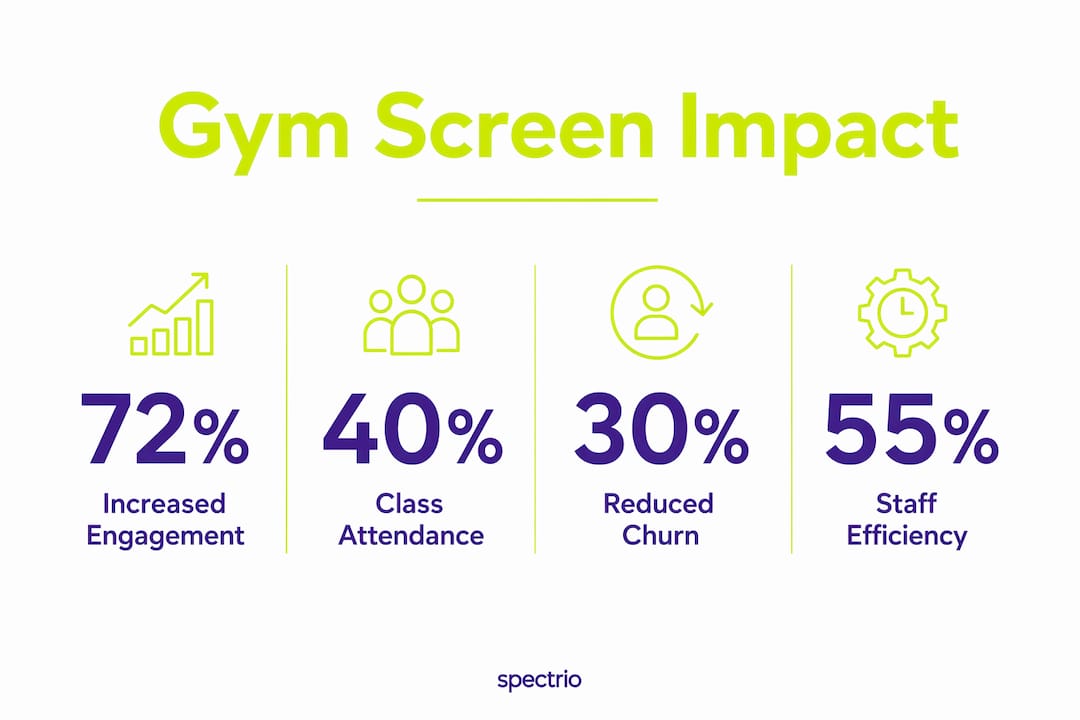
Boutique studios running promotional screens in their lobbies saw class attendance lift after installing live schedule displays near the entrance. Members who arrived for one class would see an open spot in a session starting shortly after and sign up on the spot.
Pro Tip: Place a promotional screen within sight of your front desk so staff can reference it during member conversations. It reinforces the message and reduces the number of times your team has to repeat the same information.
Advanced engagement technologies and operational insights from Spectrio
The distinction between digital signage and workout displays is one of the most overlooked decisions in gym screen strategy. Digital signage suits communication in lobbies and reception zones. Workout display software belongs on the training floor, where it synchronizes class delivery and eliminates member confusion. Mixing the two functions on a single screen in the wrong location creates noise rather than clarity.
Spectrio’s Intelligent Engagement Suite™ addresses this by enabling multi-screen zoning, where each screen in your facility is assigned a specific content role. A lobby screen runs promotions and schedules. A training floor screen runs workout sequences. A recovery area screen might display nutrition tips or upcoming events. Each zone serves a distinct purpose, and content is managed remotely through a cloud-based CMS.
Key technologies worth integrating:
- Heart rate syncing via BLE connectivity for real-time zone displays during group classes.
- AI posture correction using depth cameras that detect body landmarks and provide movement quality feedback.
- Interactive kiosks for member check-in, feedback collection, and service upsells.
- 24/7 support and dedicated account teams that keep your screens running without pulling your staff into technical troubleshooting.
How digital screens save time and promote services
Every minute a coach spends re-explaining a workout sequence or a staff member spends updating a bulletin board is a minute not spent on member experience. Digital displays for gyms eliminate that friction. A cloud-based content management system lets you update schedules, promotions, and announcements across every screen in your facility from a single dashboard, instantly.
On the promotional side, screens placed at high-traffic points convert passive foot traffic into revenue opportunities. A member waiting for a class to start is a receptive audience for a personal training upsell or a merchandise promotion. Dynamic digital signage replaces static bulletin boards with content that can be tailored by time of day, day of week, or member segment, making every promotional message more relevant.
Best practices for content design and scheduling on gym digital screens
Content that works on a gym screen is not the same as content that works on social media. Members are moving, often sweating, and glancing at screens for two to five seconds at a time. Design accordingly.
Use high-contrast visuals and large typography so text is readable from across a room. Limit each screen to one primary message per slide. Animation should guide the eye, not distract it. For workout displays, movement demo videos should loop cleanly and be filmed from the angle a member would actually replicate.
Scheduling matters as much as design. Morning sessions call for energy and motivation. Midday screens can highlight nutrition or recovery services. Evening content can promote upcoming weekend classes or community events. A content scheduling tool with analytics lets you test which messages perform at which times and adjust without guesswork.
Integration of digital screens with member management systems and mobile apps
Screens become significantly more useful when they pull live data from your member management platform. Class schedules displayed in real time, member check-in confirmations, and personalized milestone announcements all require a connection between your signage software and your management system.
Platforms that support REST API integration can connect with gym management tools like Mindbody, ClubReady, and Virtuagym, enabling screens to reflect live booking data and member activity. On the mobile side, QR codes on screens give members a direct path from a displayed promotion to a booking page or feedback form on their phone. That connection between the physical screen and the member’s device closes the loop on member engagement solutions that would otherwise require staff intervention.
Measuring and analyzing member engagement metrics via digital screens
You cannot improve what you do not measure. The screens themselves generate useful data: which content gets the most dwell time, which QR codes get scanned, and which promotional messages correlate with class sign-ups or service purchases. A content management platform with built-in analytics surfaces these patterns without requiring manual tracking.
Beyond screen-level data, connect your signage performance to broader membership metrics. If a promotional campaign runs on your lobby screens for two weeks, compare class attendance and upsell conversion rates during that period against your baseline. That comparison tells you whether the content is working or just filling space. Spectrio’s approach to signage ROI measurement ties content performance directly to business outcomes, giving gym owners a clear picture of what each screen is contributing.
Strategies for personalized and interactive content to enhance motivation
Personalization on gym screens does not require individual targeting at the level of a mobile app. It starts with audience segmentation by time of day and location within the facility. Early morning members respond differently to content than lunchtime drop-ins. A screen near the free weights serves a different audience than one in the cycling studio.
Interactive content takes personalization further. Leaderboards that display member names and workout stats create a social dynamic that passive signage cannot replicate. Gamification elements like streak tracking and achievement milestones give members a reason to return consistently. Pairing these with a well-structured marketing automation checklist helps you plan content campaigns that align screen messaging with your broader member communication strategy.
Spectrio’s Intelligent Engagement Suite™ gives gym owners the tools to manage every screen in their facility from one platform, with content scheduling, audience measurement, and round-the-clock support built in. If you are ready to see what digital signage can do for your member experience, Spectrio is built for exactly that.
Key Takeaways
Digital screens drive gym member engagement most effectively when each screen has a defined role, content is scheduled by audience and time of day, and performance is measured against real membership outcomes.
| Point | Details |
|---|---|
| Separate signage from workout displays | Lobby screens handle promotions; training floor screens run workout sequences and timers. |
| Gamification increases retention | Leaderboards, streak tracking, and achievement badges incentivize consistent attendance. |
| Coaches benefit directly | Workout displays handle timekeeping and sequencing, freeing coaches for personal interaction. |
| Integration amplifies impact | Connecting screens to platforms like Mindbody or ClubReady enables live schedules and personalized content. |
| Measure content performance | Analytics tied to class attendance and upsell conversions show which screen content earns its place. |
FAQ
What are gym member engagement digital screens?
Gym member engagement digital screens are display systems used in fitness centers to deliver workout guidance, promotional content, class schedules, and interactive features that motivate members and improve their experience.
How do workout displays differ from digital signage in a gym?
Digital signage handles communication in lobbies and common areas, while workout displays run training delivery on the gym floor, showing timers, movement demos, and coaching cues.
Can digital screens help reduce member churn?
Yes. Screens that display clear workout sequences build member confidence, and gamification features like leaderboards and streak tracking incentivize consistent attendance, both of which support retention.
What content works best on gym digital screens?
High-contrast visuals, large typography, short messages, and looping movement demo videos perform best. Scheduling content by time of day and member segment increases relevance and response.
How do gym screens integrate with member management software?
Platforms with REST API support connect to gym management tools like Mindbody, ClubReady, and Virtuagym, enabling live class schedules, booking confirmations, and personalized milestone displays directly on screen.