


On-hold messaging is a business phone feature that plays recorded voice messages and background music to callers waiting on hold, turning idle wait time into a branded experience. Without it, 70% of callers hang up after just 60 seconds of silence. That single statistic explains why the best on-hold messaging systems businesses use are not an afterthought. They are a deliberate part of the caller experience, built to reduce abandonment, reinforce brand identity, and even influence purchasing decisions before a single agent picks up the phone.
How on-hold messaging works: the core mechanics
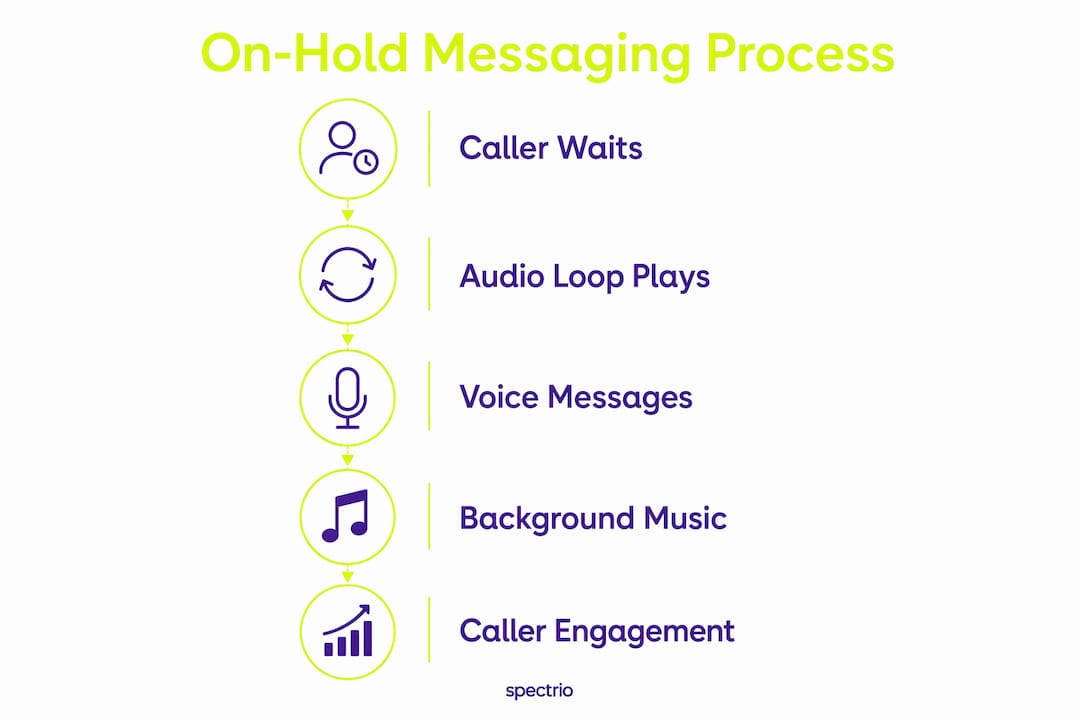
On-hold messaging, also called “message on hold” in the industry, operates through a continuous audio loop delivered to callers placed on hold by your phone system. The loop alternates between background music and short recorded voice segments. When a voice message plays, an audio technique called ducking automatically lowers the music volume so the voice is clear and easy to understand. When the message ends, the music returns to its normal level.
The loop itself runs on a set cycle. Industry best practice sets the optimal loop at 2–3 minutes, with individual voice segments lasting 20–45 seconds each. That structure prevents any single message from feeling long or repetitive. A caller who waits two minutes hears a variety of messages separated by music, not the same 10-second clip on repeat.

The audio file is delivered to callers through your phone system, whether that is a traditional PBX or a modern VoIP platform. The system triggers the loop the moment a caller is placed on hold and stops it the moment an agent reconnects. From the caller’s perspective, the experience feels continuous and professional.
What makes the audio loop effective
Several elements determine whether a loop holds a caller’s attention or drives them to hang up.
- Music selection: Instrumental tracks without lyrics work best. Lyrics compete with a caller’s internal monologue and create cognitive overload. The right on-hold music choice reflects your brand’s tone, whether that is calm and reassuring for a healthcare provider or upbeat for a retail brand.
- Voice message length: Each message segment should follow the 50-word rule. Fifty words read aloud at a natural pace fills roughly 20–45 seconds, which is the sweet spot for clarity and engagement.
- Audio mixing: Ducking is non-negotiable for professional sound. Without it, voice and music compete at the same volume, making both harder to follow.
- Loop structure: Modular loops with multiple distinct messages prevent repetition fatigue. A caller who waits five minutes should hear at least two or three different messages before the loop restarts.
- Licensed music: Using legally cleared music tracks protects your business from copyright liability and keeps your brand presentation professional.
Pro Tip: Record your messages at a slightly slower pace than normal conversation. Phone audio compression reduces clarity, and a measured delivery rate compensates for that loss.
How does on-hold messaging influence caller behavior?
The behavioral impact of on-hold messaging is measurable and direct. Callers stay up to 3 minutes longer on hold when they hear music and messaging compared to silence. Three minutes is a significant window. It is enough time to share your hours, promote a current offer, explain a service, and reinforce your brand voice.
“Up to 20% of callers make a purchasing decision while on hold. That means your hold queue is not dead time. It is an active sales channel that most businesses leave completely unused.”
The psychology behind this is straightforward. Silence signals abandonment. A caller sitting in silence has no evidence that anyone is coming back. Music and messaging signal that the call is active and that the business is present. Perceived wait time drops when callers have something to engage with, even passively.
On-hold messaging also functions as a branding touchpoint. Every message a caller hears shapes their impression of your business. A well-produced loop with a professional voice, relevant information, and quality music communicates competence. A loop with a tinny recording, outdated promotions, and generic hold music communicates the opposite. The caller experience during hold time is part of your brand, whether you manage it or not.
Combining on-hold messaging with IVR (interactive voice response) and voicemail creates a cohesive caller experience that addresses the full call journey. Each element reinforces the others, and the result is a phone system that feels organized and intentional from the first ring to the final resolution.
How do businesses create effective on-hold messages?
Creating a strong on-hold message starts with the script. The most common mistake businesses make is writing messages that sound like press releases. Corporate jargon and passive voice reduce caller trust. Conversational, active language does the opposite. Write the way your best customer service rep talks, not the way your legal team writes.
A practical production process follows these steps:
- Write the script. Keep each message to roughly 50 words. Focus on one idea per message: a service, a promotion, a frequently asked question, or a reassurance that someone will be with them shortly.
- Choose your voice talent. Professional voice actors deliver consistent tone and pacing. Advanced AI voices have improved significantly and offer a cost-effective alternative for businesses that need frequent updates. Match the voice to your brand’s personality.
- Select and license your music. Work with a provider that supplies music already cleared for commercial use. This removes copyright risk entirely.
- Mix the audio. Apply ducking so voice segments are always intelligible. Export the final file in a format compatible with your phone system, typically WAV or MP3 at the bitrate and sampling frequency your system requires.
- Test the recording live. Call your own business line and listen from the caller’s perspective. Check for volume balance, clarity, and timing before the loop goes live.
Pro Tip: Write scripts for persuasive, caller-focused messaging by leading with the benefit to the caller, not the feature of your product. “You can book appointments online 24/7” lands better than “We offer an online booking system.”
Outdated messages signal disorganization to callers. A loop that still references a holiday promotion in march or a discontinued service actively damages brand trust. Quarterly or seasonal updates keep content accurate and relevant. Set a calendar reminder and treat message updates the same way you treat updating your website.
What are the technical requirements for on-hold messaging systems?
The technical side of on-hold messaging depends on the type of phone system your business runs. The two main categories are traditional PBX systems and cloud-based VoIP platforms, and they handle on-hold audio differently.
- VoIP systems: Most modern VoIP platforms let you upload audio files directly through an online portal. You log in, navigate to the hold music or messaging settings, upload your file, and the system handles the rest. No hardware is required.
- Traditional PBX systems: Older on-premises PBX setups often require a physical music-on-hold device connected to the system. The audio file is loaded onto the device, which plays the loop whenever a caller is placed on hold.
- Audio format requirements: Most systems accept WAV or MP3 files. WAV at 8kHz or 16kHz mono is a common requirement for PBX systems. VoIP platforms often accept higher-quality MP3 files. Check your system’s documentation before exporting your final audio.
- Modular loop design: Building your loop from multiple distinct message segments prevents listener fatigue for callers who wait longer than the loop’s full cycle. A caller who waits six minutes should not hear the same message four times.
- Testing before deployment: Verify the audio sounds correct through the actual phone system, not just on your computer speakers. Phone audio compression changes how recordings sound, and a file that sounds great on a laptop may sound thin or distorted through a handset.
| System type | Upload method | Common audio format |
|---|---|---|
| Cloud VoIP | Online portal upload | MP3 or WAV |
| Traditional PBX | Physical hardware device | WAV (8kHz mono) |
| Hosted PBX | Admin dashboard upload | WAV or MP3 |
Key Takeaways
On-hold messaging works by combining licensed music, professionally scripted voice messages, and proper audio mixing into a looped program that reduces caller abandonment and turns hold time into a productive brand touchpoint.
| Point | Details |
|---|---|
| Silence drives hang-ups | 70% of callers abandon a call after 60 seconds of silence without music or messaging. |
| Loop structure matters | Keep loops at 2–3 minutes with individual message segments at 20–45 seconds each. |
| Scripts need active language | Write conversational, 50-word messages that lead with the benefit to the caller. |
| Update content regularly | Quarterly or seasonal updates prevent outdated messages from damaging brand trust. |
| Test from the caller’s view | Always call your own line to verify audio quality before the loop goes live. |
What most businesses get wrong about on-hold messaging
Working with businesses across industries, I have seen the same mistake repeated constantly. Owners treat on-hold messaging as a one-time setup task. They record a loop, upload it, and forget it exists. Six months later, callers are hearing promotions for events that ended in january and phone numbers that no longer work.
The businesses that get the most value from on-hold messaging treat it as a living part of their communication strategy. They update scripts when services change, swap in seasonal content before major holidays, and periodically review whether the voice and music still match their current brand. That discipline is what separates a professional caller experience from an embarrassing one.
The other pattern I see is over-promoting. A loop that is 80% sales pitch and 20% useful information frustrates callers who are already waiting. The most effective messaging mixes practical information, like hours, website details, and service reminders, with light promotional content. Callers who feel informed are far more likely to stay loyal to your brand than callers who feel sold to while they wait.
On-hold messaging is not a minor phone system feature. It is a direct line to every caller who has ever been placed on hold, and that is a significant audience. Treat it with the same care you give your website copy or your social media presence.
How Spectrio helps businesses put on-hold messaging to work
Spectrio’s on-hold messaging service gives business owners a complete production solution, from professional scriptwriting and licensed music to voice talent selection and phone system integration. You get a finished, broadcast-quality audio loop without needing to manage recording studios, copyright clearances, or audio engineering.
Spectrio’s team handles voice talent and music demos so you can hear exactly how your brand will sound before anything goes live. The service covers both VoIP and traditional PBX systems, and the dedicated account team manages updates so your content stays current. For businesses that want every caller touchpoint to reflect their brand accurately, Spectrio provides the infrastructure and the expertise to make that happen consistently.
FAQ
What is on-hold messaging?
On-hold messaging is a phone system feature that plays recorded voice messages and background music to callers placed on hold. It replaces silence with branded, informational audio that reduces hang-ups and improves caller experience.
How long should an on-hold message loop be?
The optimal loop runs 2–3 minutes, with individual voice message segments lasting 20–45 seconds. This structure gives callers variety and prevents repetition fatigue during longer waits.
Does on-hold messaging actually reduce hang-ups?
Yes. Research shows 70% of callers hang up after 60 seconds of silence, while callers who hear music and messaging stay on the line up to 3 minutes longer. The difference is significant for businesses with high call volumes.
How often should I update my on-hold messages?
Update your messages quarterly or whenever a service, promotion, or key business detail changes. Outdated content signals disorganization and can actively damage caller trust.
What audio format does on-hold messaging require?
Most VoIP systems accept MP3 or WAV files. Traditional PBX systems typically require WAV files at 8kHz mono. Always confirm the exact specifications with your phone system provider before exporting your final audio file.