



Signage is defined as the physical and visual communication system that expresses a brand’s identity, values, and narrative at every customer touchpoint. Understanding how signage supports brand storytelling is no longer optional for brand managers. It is a core commercial discipline. Your signs work around the clock, communicating who you are even when your team is not present. Brands that treat signage as a strategic storytelling tool, not a decorative afterthought, build faster recognition, stronger trust, and deeper customer loyalty. Spectrio’s Intelligent Engagement Suite™ exists precisely because this gap between signage potential and signage execution costs brands real revenue.
What role does signage play in conveying brand identity and narrative?
Signage is a brand’s silent ambassador. Every color choice, typeface, material, and placement decision communicates something about your values before a single word is read. The industry term for this discipline is environmental graphic design, and it covers everything from exterior fascia signs to interior wayfinding, accent walls, and window graphics.

Consistent application of standardized colors, typography, and logo usage on physical signage creates the fastest and longest-lasting consumer impressions, outperforming digital branding alone. That finding matters because it means your physical space is doing brand work that no social media post can replicate.
Three signage elements carry the most brand narrative weight:
- Color: Color triggers emotional responses before the brain processes language. A warm amber palette signals approachability; a cool monochrome palette signals precision and authority.
- Typography: Font choice communicates personality. A serif typeface reads as established and trustworthy. A geometric sans-serif reads as modern and direct.
- Materials: Brushed metal signals premium quality. Reclaimed wood signals sustainability and craft. The material is part of the message.
Environmental graphics extend this further by turning entire walls, floors, and ceilings into storytelling surfaces. A brand timeline on a lobby wall, a values statement etched into a reception desk, or a mural depicting the company’s founding city all function as spatial storytelling tools that shape how customers feel inside your space.
“Low-quality signage can leak negative brand sentiment 24/7. Considered signage signals care and trustworthiness, broadcasting your brand values continuously even when staff are absent or premises are closed.”
The implication is direct: every sign you place is either building or eroding brand equity. There is no neutral position.
How does effective signage improve customer experience and engagement?
Signage reduces customer anxiety. Clear, branded wayfinding systems decrease dwell-time friction and improve customer confidence when navigating unfamiliar environments. That confidence translates directly into longer visits and higher purchase likelihood.
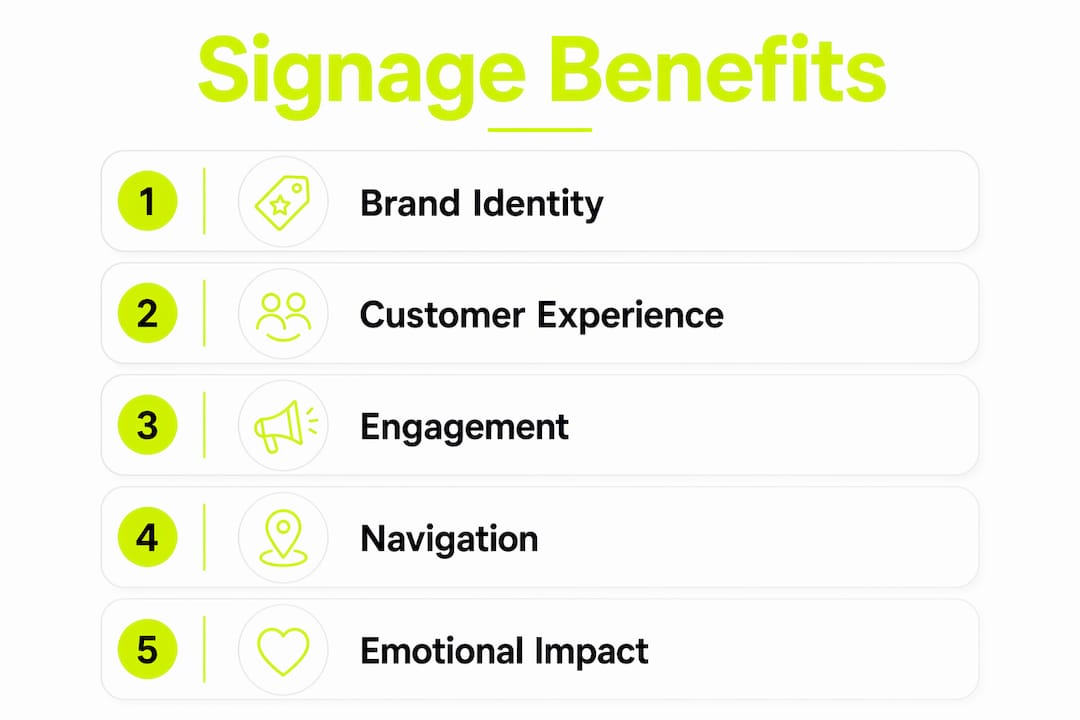
Retail signage also functions as a cognitive map. It shapes the pace at which customers move, the mood they carry through a space, and the emotional connection they form with your brand. Strategically placed signage can increase dwell time and basket value by up to 15%. That is not a design benefit. That is a P&L benefit.
| Signage function | Customer impact | Business outcome |
|---|---|---|
| Wayfinding | Reduces navigation anxiety | Longer dwell time |
| Promotional messaging | Highlights offers at decision points | Higher basket value |
| Brand story panels | Builds emotional connection | Increased loyalty |
| Safety and compliance signs | Builds trust and confidence | Reduced liability risk |
The psychological principle at work is emotional anchoring. When a customer feels oriented and informed, they associate that positive feeling with your brand. The sign that helped them find the fitting room is not just functional. It is a micro-moment of brand goodwill.
Pro Tip: Place brand story content at natural pause points in your space, such as near checkout lines, waiting areas, or elevator lobbies. Customers who are stationary are far more likely to read and absorb your narrative.
Signage also reduces the cognitive load customers carry. A well-signed space requires less mental effort to navigate. Less effort means more mental bandwidth for noticing your products, your offers, and your brand personality. That is why engaging signage content is worth investing in at every stage of the customer journey.
What design principles make signage an effective storytelling tool?
The most important distinction in signage design is the difference between informational signage and directive signage. Informational signs tell customers what exists. Directive signs tell customers what to do. The most powerful signs do a third thing: they explain the why behind the instruction.
Signs that communicate the reasoning behind a direction reduce cognitive load and build rapport with customers. When users understand the story behind a navigation cue, they comply more readily and feel less resistance. A sign that reads “Please use the side entrance” creates mild friction. A sign that reads “Please use the side entrance to keep our main floor clear for you during peak hours” creates understanding and goodwill.
This principle extends to what designers call personality design. Personality design through iconic signage curates specific brand attributes and crafts a recognizable voice across every visual touchpoint. It is the practice of defining your brand’s character through cohesive visual and messaging components, then expressing that character consistently on every sign in your environment.
| Signage type | Primary function | Storytelling potential |
|---|---|---|
| Informational | Describes what exists | Low to moderate |
| Directive | Tells customers what to do | Moderate |
| Narrative or personality | Communicates brand values and voice | High |
| Environmental graphic | Transforms space into brand experience | Very high |
Brands that use signage to share their history, founding story, or core values turn their physical space into a living brand document. A coffee brand that displays its sourcing story on a wall panel is not just decorating. It is giving customers a reason to care, and a story to repeat to friends.
Pro Tip: Treat your most visible interior wall as a brand statement, not a blank surface. A single well-designed panel communicating your founding principle or core value does more brand work than a dozen generic promotional signs.
Visual storytelling principles apply directly here. The hierarchy of information on a sign, what the eye sees first, second, and third, determines whether the brand story lands or gets ignored. Design for the eye’s natural path, not for the layout grid.
How do you integrate signage into a brand storytelling strategy?
Signage works best when it is planned at the same time as the space itself, not added after construction or renovation is complete. Integrating signage during spatial planning increases its effectiveness as a storytelling and branding tool. Experts consistently recommend early, strategic signage planning to avoid the impression of signs as an afterthought.
For brand managers, this means getting signage into the brief at the same time as interior design, not after. Here is how to structure that integration:
- Audit your current touchpoints. Walk your space as a customer would. Note every moment where a sign exists, where one is missing, and where the brand voice goes silent.
- Map your brand narrative arc. Decide what story you want customers to experience from entry to exit. Assign signage roles to each stage: welcome, orient, inform, engage, convert, and retain.
- Standardize brand elements across every sign. Brand consistency across signage builds trust and recognition faster than digital efforts alone. Lock down your color codes, approved typefaces, logo usage rules, and tone of voice before production begins.
- Balance printed and digital signage. Printed signage delivers durability, tactile quality, and permanence. Digital signage delivers flexibility, real-time updates, and dynamic content. The right mix depends on your space, your budget, and how frequently your messaging changes. Spectrio’s approach to printed versus digital signage offers a practical framework for making that call.
- Connect signage to your omnichannel strategy. Your in-store signs should echo the language, visuals, and offers your customers see online and in email. Disconnected messaging creates doubt. Consistent messaging creates confidence.
The brands that get signage right treat it as a channel, not a category of expense. Every sign has a job. Every sign tells part of the story. When the whole system works together, the customer experience feels coherent and intentional, and that coherence is what builds lasting brand loyalty.
Key Takeaways
Signage is a continuous, physical brand communication channel that builds trust, shapes customer behavior, and tells your brand story at every touchpoint, 24 hours a day.
| Point | Details |
|---|---|
| Signage as brand ambassador | Every design element, from color to material, communicates brand values before a word is read. |
| Wayfinding reduces anxiety | Clear signage lowers dwell-time friction and increases customer confidence and purchase likelihood. |
| Explain the “why” | Signs that communicate reasoning behind directions build rapport and reduce customer resistance. |
| Personality design matters | Defining brand voice through cohesive signage components creates emotional loyalty, not just recognition. |
| Plan signage early | Integrating signage during spatial planning, not after, maximizes its storytelling and commercial impact. |
Why signage is the most underrated brand asset you control
Brand managers spend significant budget on digital ads, social content, and influencer campaigns. Those channels are worth it. But signage is the one brand asset that works without a media buy, without an algorithm, and without a content calendar. It just works, every hour the space is open and every hour it is not.
I have seen brands invest heavily in a beautiful website and then walk customers into a space where the signs look like they were printed in 2009. The disconnect is jarring. Customers notice it even when they cannot articulate it. What they feel is a vague sense that the brand does not quite add up. That feeling erodes trust faster than any bad review.
The brands I respect most treat their worst-performing sign the same way they treat a broken link on their homepage. It is a brand problem, not a facilities problem. Poor signage quality signals neglect and damages brand trust on a continuous basis. That is not an opinion. It is a documented pattern.
My honest advice: do a sign audit before your next campaign launch. Walk every inch of your customer-facing space and ask whether each sign is doing brand work or just taking up wall space. You will find opportunities that no media budget can buy.
Spectrio’s signage solutions for your brand story
Your brand story deserves to be told consistently, from the moment a customer sees your exterior sign to the last screen they pass on the way out.

Spectrio’s Intelligent Engagement Suite™ gives brand managers the tools to execute that story across both digital and printed signage. Digital signage delivers dynamic content that updates in real time, so your messaging stays current without reprinting. Printed signage delivers the tactile permanence that builds trust in physical spaces. Together, they create a brand environment that feels intentional at every turn. Explore unique digital signage applications or review signage ROI data to build the business case for your next investment.
FAQ
What is the role of signage in brand storytelling?
Signage physically expresses a brand’s identity, values, and narrative at every customer touchpoint. It communicates brand character through design elements like color, typography, and materials, working continuously even when staff are not present.
How does signage affect customer behavior?
Strategically placed signage functions as a cognitive map, shaping customer pace, mood, and emotional connection. Research shows it can increase dwell time and basket value by up to 15% when executed well.
What makes signage effective for storytelling?
Effective signage goes beyond information and direction by communicating the reasoning behind instructions and expressing brand personality. Signs that explain the “why” build rapport and reduce customer resistance.
Should brands use printed or digital signage for storytelling?
Both formats serve different storytelling needs. Printed signage delivers permanence and tactile quality, while digital signage offers flexibility and real-time content updates. Most brand environments benefit from a deliberate mix of both.
When should signage be integrated into brand planning?
Signage should be integrated during spatial and brand experience planning, not added after a space is built. Early integration ensures signs function as storytelling assets rather than functional additions.