



Every line item on the P&L is under pressure right now. Operating costs keep climbing while the gap between what you spend to acquire a customer and what that customer actually spends in your location keeps narrowing.
The hardest part of defending margins in a high energy economy has historically been proving the impact. Executives approve a capital expenditure for screens, and then six months later there’s no clear attributing revenue to that spend.
Yet every quarter you’re managing higher costs across dozens or hundreds of locations while trying to maintain the kind of experience that keeps people coming back.
So where do you look for relief?
Every Square Foot Has a Job to Do
Most businesses treat their physical footprint as a fixed cost: rent, utilities, maintenance. The space exists to sell products, and the conversation ends there.
But every surface in your location is a chance to influence a purchasing decision, reinforce your brand, or generate revenue you’re currently leaving on the table.
Digital signage is the clearest example.
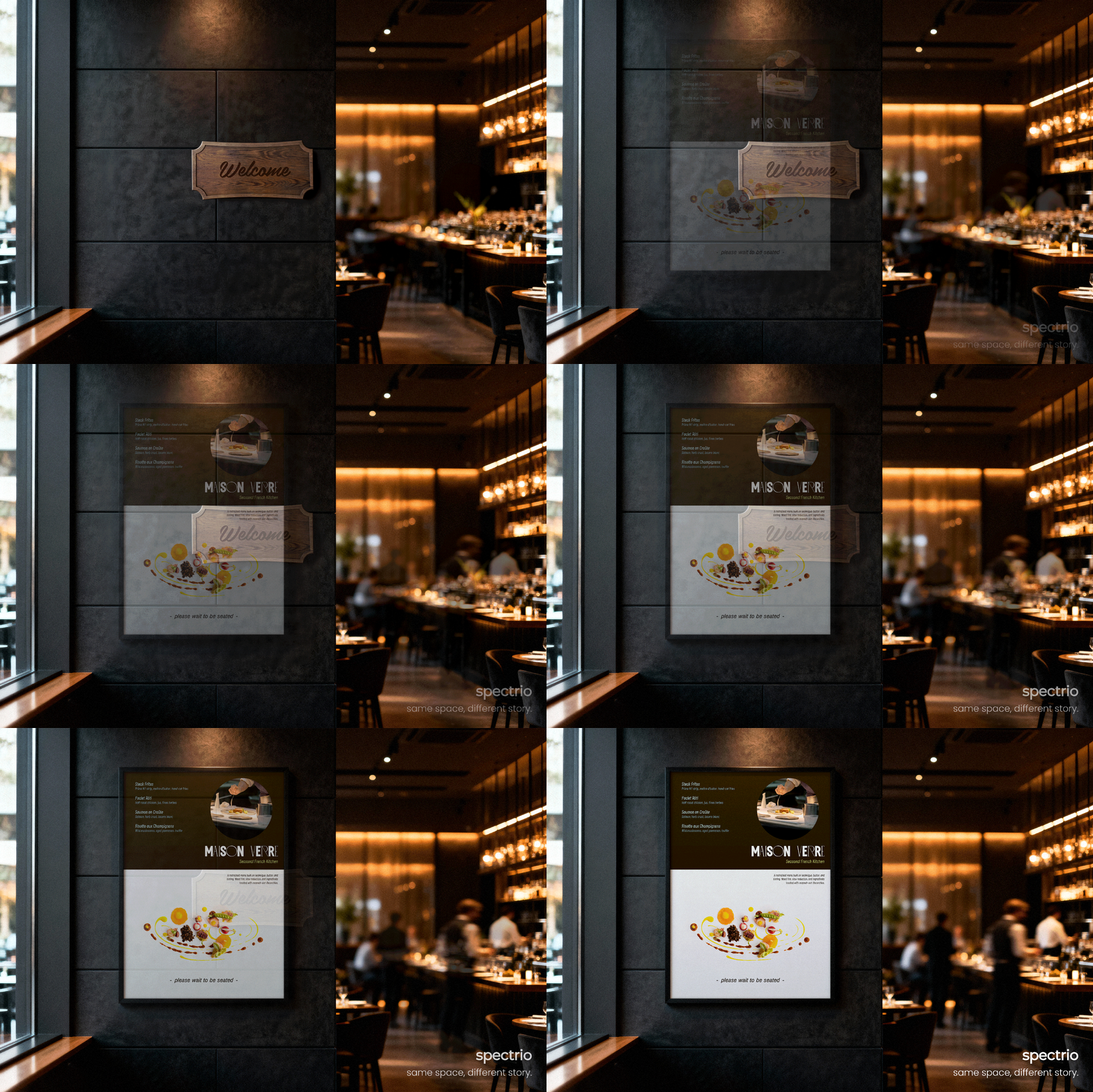
A well-placed screen running the right content at the right time can drive upsells and promote high-margin items without adding a single labor hour.
And with a cloud-based content management system, updates happen in minutes across your entire network from one dashboard. That matters when you’re running a promotion that needs to go live tomorrow morning at 500 locations.
The old way of printing, shipping, and hoping someone hangs the right poster in the right spot costs more and works less.
Stop Guessing What Works
One of the more expensive habits in retail and service businesses is running campaigns without knowing whether they moved the needle. You spend on creative, deploy it across your locations, and then… hope.
Audience measurement replaces that guesswork with real data.
When you add radar sensors and camera-based analytics to your locations, you gain visibility into how people interact with your space and your content:
- Dwell time and engagement levels measure which content is holding attention
- Traffic flow and occupancy patterns reveal how customers move through your space
- Content performance scoring flags when it’s time for a refresh, so no more guessing
That data feeds directly into better decisions about what to promote, where to place screens, and when to refresh. A/B testing becomes practical when you can measure the outcome.
Now you’re no longer debating whether the new menu board layout performs better. You can see it, in real numbers, across real locations. For businesses operating on tight margins, eliminating guesswork is a margin strategy in itself.
Turn Screens Into Revenue Streams
Here’s where it gets interesting for the finance team. For businesses with meaningful foot traffic, there’s a margin play that goes beyond cost reduction: retail media. If your business operates physical locations with digital screens, you’re sitting on ad inventory.
A retail media network lets you monetize a portion of your screen time by selling ad placements to the brands you already carry. They want access to your audience at the point of decision, and they’re willing to pay for it.

By allocating even 20-30% of screen time to brand advertising, some retailers recoup their entire digital signage investment within the first year.
What keeps brand dollars flowing is accountability.
The same measurement tools that optimize your content can also validate performance for your advertising partners, giving them proof of impressions, engagement, and proof of play.
The ad content integrates directly into your existing playlists, so your in-store experience stays cohesive and the screens still feel like yours.
Labor Is Your Most Expensive Asset.
Treat It That Way.
Labor is one of the largest controllable costs in any brick-and-mortar operation.
Yet when a store manager spends two hours a week troubleshooting a frozen screen or manually updating a playlist, that’s two hours not spent with customers. Multiply that across a few hundred locations and you’ve got a serious labor allocation problem.
Automation solves this at scale:
- Content triggers that update based on inventory levels, time of day, or weather conditions, with no manual intervention required
- Remote monitoring that catches hardware issues before they become floor-level emergencies
- Plug-and-play installation so your team isn’t doubling as an AV crew during rollouts
The goal is technology that works like an additional team member, so your managers stay focused on customers instead of crawling behind screens with a ladder.
Influence the Way People Feel
Operational costs tend to dominate margin conversations, but there’s a revenue-side variable that gets overlooked: how long customers stay and how much they’re willing to spend while they’re there.
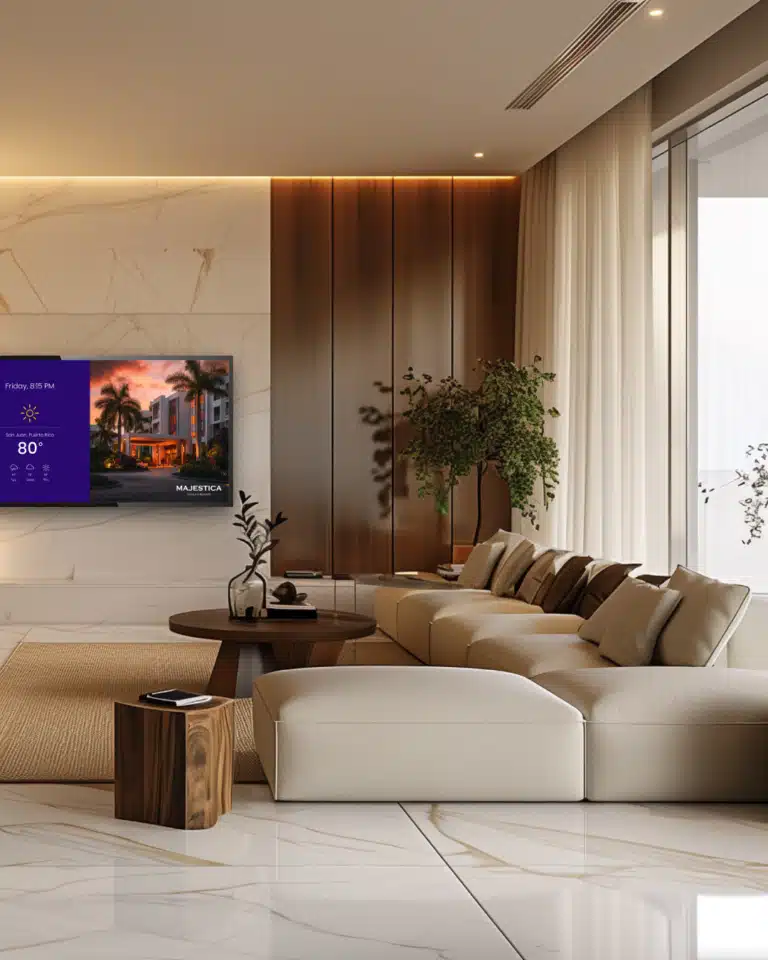
Research into sensory marketing consistently shows that ambient scent can influence purchasing behavior, perceived product value, and customer dwell time by 10 to 15 percent.
The right overhead music program keeps people in the store longer and puts them in a buying mood.
On-hold messaging reduces hang-ups and reinforces promotions during a moment when the caller is already engaged with your brand.
None of these are dramatic, headline-grabbing moves but when every other cost is rising, getting more value out of the curated experience is one of the few levers you fully control.
The question is whether they’re working for you or just filling space.
Your WiFi Network Is Sitting on Customer Intelligence
Most businesses think of guest WiFi as a convenience; something you offer because people expect it. But every login is a data point, and every visit builds a profile. Login information, visit frequency, dwell time, movement patterns through the store.
All of it is actionable.
Over time, that data reveals patterns. Who’s a first-time visitor versus a regular? Which days and hours drive the most foot traffic? What areas of your location get the most and least attention?
That intelligence powers marketing that’s specific and timely. You can send a welcome offer to someone on their first visit, or trigger a loyalty reminder for a customer who hasn’t been back in a few weeks.

Mobile coupons alone see open rates ten times higher than print, allowing businesses to track engagement, speed, and what actually moved the register. This level of visibility helps operators adjust promotions based on real customer behavior instead of assumptions.
One Platform, Every Lever
No single solution defends your margins on its own.
But when digital signage, audience measurement, overhead music, scent, WiFi campaigns, and retail media all run through one platform, managed remotely and measured against actual business outcomes, the cumulative impact changes the math.
If margins are under pressure, start where the impact is most visible. Are your screens current? Is your content automated or manual? Look at where managers are spending time on tasks that technology could handle.
Can you measure what’s working?
The answers will point you toward the highest-value starting point. From there, the path forward is incremental: deploy, measure, optimize, expand. Each step builds evidence for the next, and the margin impact compounds over time.
In an economy that punishes inefficiency, the businesses that thrive aren’t necessarily spending more. They’re getting more from what they already have. Your physical locations are already your largest investment. The opportunity is making them your hardest-working asset.
Ready to see what your locations could be doing?
Schedule a demo and we’ll walk through the numbers together.