


Dynamic content display is defined as digital content that automatically changes based on real-time user data, behavior, and context to deliver a personalized experience to each viewer. Unlike a static webpage or sign that shows the same message to everyone, a dynamic display reads signals like location, device type, browsing history, or CRM segment and serves the most relevant content for that moment. Over 70% of customers expect personalized content when engaging with brands online, and 75% report frustration when they don’t get it. That gap between expectation and delivery is exactly where dynamic content marketing closes the deal. For marketing professionals and business owners, understanding what is dynamic content display is no longer optional. Personalization is now fundamental to modern digital marketing engagement.
What is dynamic content display and how does it work?
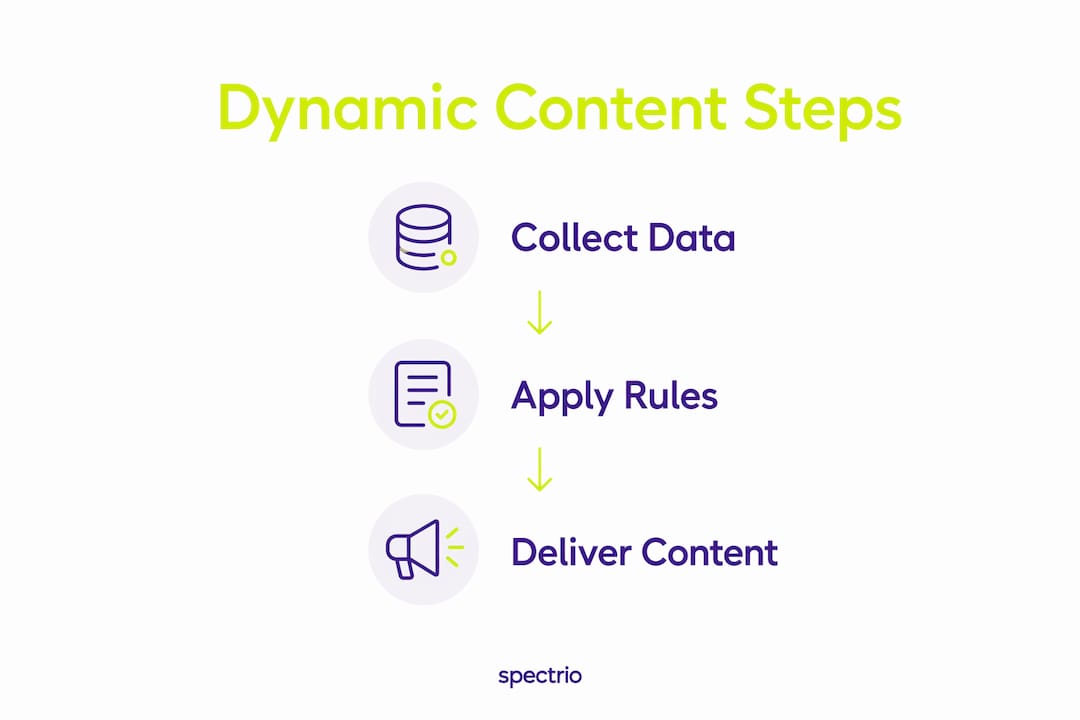
Dynamic content display follows a clear three-step logic: collect user data, apply segmentation rules, and serve relevant content in real time. That process sounds simple, but the power is in the data sources feeding it.
Step 1: Data collection
Your system pulls signals from multiple sources simultaneously. These include CRM records (purchase history, lifecycle stage), on-site behavior (pages visited, time on page), device type, geographic location, and referral source. The richer your data, the more precise your content targeting becomes.

Step 2: Segmentation and personalization rules
A personalization engine matches incoming user signals to predefined audience segments. Rule-based engines use “if/then” logic: if a visitor is a returning customer from Chicago, show the loyalty offer. AI-powered engines go further by responding to inferred intent and real-time browsing behavior, not just static profile data. Both approaches work. AI adds nuance at scale.
Step 3: Real-time content assembly and delivery
The system pulls the right content block for that user and assembles the page or screen in milliseconds. Modular content strategies reduce production overhead by swapping reusable blocks based on user segments, rather than building unique full pages. You build once and the system mixes and matches.
Pro Tip: Start with three to five clearly defined audience segments before building any dynamic rules. Vague segments produce vague personalization, which is worse than no personalization at all.
You can see this segmentation approach in action with streaming content for segmented audiences, where real-time rules determine which message reaches which viewer.
How does dynamic content compare to static content?
Static content is defined as a fixed message delivered identically to every viewer, regardless of who they are or what they need. A printed poster, a standard homepage banner, and a generic email blast are all static content. They require no data input and no real-time logic.
The marketing impact of that difference is significant. Dynamic content avoids the one-size-fits-all approach of static content, enabling different messages per audience segment and improving both relevance and engagement. Static content is easier to produce but loses effectiveness as your audience diversifies.
| Dimension | Static content | Dynamic content |
|---|---|---|
| Personalization | None | Segment or individual level |
| Relevance | Fixed for all viewers | Adapts per user signal |
| Production effort | Low per asset | Higher setup, lower ongoing |
| Conversion potential | Baseline | 20–40% higher on personalized CTAs |
| Governance risk | Minimal | Requires data hygiene and brand controls |
The risks of dynamic content at scale are real. Brand consistency can break down when dozens of content variants exist without a clear governance framework. Messaging can contradict itself across segments if no one owns the content rules. The solution is a content governance layer: a defined approval process, a master brand voice guide, and regular audits of active variants.
Pro Tip: Assign one person or team to own your dynamic content rules. Without clear ownership, variants multiply and brand consistency erodes fast.
What are the benefits of dynamic content display?
The business case for dynamic content is grounded in measurable performance gains. B2B marketing teams using dynamic content see 20–40% higher conversion rates on personalized CTAs and landing pages versus static versions. That is not a marginal improvement. It is the difference between a campaign that pays for itself and one that doesn’t.
The benefits extend beyond conversion rates:
- Higher engagement: Relevant content holds attention longer. A visitor who sees a message matched to their industry or purchase stage reads more and clicks more.
- Reduced campaign volume: Dynamic content replaces multiple specific campaigns with one smart template, increasing efficiency and nurture quality. You run fewer campaigns with better results.
- Improved customer satisfaction: Personalized experiences feel respectful of the customer’s time. Generic experiences feel lazy.
- Lower cost per acquisition: When content converts at a higher rate, your media spend goes further.
- Scalable one-to-one communication: Dynamic content mimics one-on-one conversations at scale by adapting offers based on user data, which is critical to counter shrinking attention spans.
Understanding how personalized content improves conversion rates is the first step toward building a business case for dynamic content investment inside your organization.
How do you implement dynamic content display effectively?
Effective implementation starts with data quality, not technology. Poor data hygiene leads to irrelevant personalization that alienates customers. Auditing your CRM and audience segments before writing a single personalization rule is non-negotiable.
- Audit your data first. Clean your CRM, remove duplicate records, and validate segment definitions. Garbage in means garbage out, regardless of how sophisticated your personalization engine is.
- Build modular content blocks. Create reusable headlines, images, CTAs, and body copy that can be mixed and matched. Start with modular content blocks and avoid attempting full personalization on entire pages at once.
- Use no-code or low-code tools. Modern platforms empower marketing teams to manage segmentation and personalization without constant developer help. This speeds up testing and reduces bottlenecks.
- Test iteratively. Run A/B tests on your dynamic variants against static controls. Measure click-through rate, time on page, and conversion rate. Let data, not assumptions, drive your next iteration.
- Set guardrails against over-personalization. If a user searched for one product once, that single signal should not dominate every interaction they have with your brand. Relevance requires context, not just data.
Pro Tip: Map your content blocks to your CRM lifecycle stages before launch. A prospect, a first-time buyer, and a loyal customer each need a different message. If your blocks don’t reflect those stages, your personalization will feel random.
The content marketing automation resources at BabyLove Growth offer a practical look at how automation tools serve personalized content at scale without overwhelming your marketing team. For a deeper read on why personalized content matters for engagement, that resource covers the strategic case clearly.
Spectrio’s perspective on dynamic content in 2026
The most common mistake we see from marketing teams is treating dynamic content as a technology project rather than a strategy project. They invest in a platform, connect their CRM, and then stall because they never defined what they actually want to say to each segment.
Customer expectations have shifted significantly. Audiences in 2026 recognize generic messaging immediately, and they disengage just as fast. The brands winning on personalization are not necessarily the ones with the most sophisticated AI. They are the ones with the clearest understanding of their audience segments and the discipline to maintain clean data.
The implementation challenges are real but solvable. Start smaller than you think you need to. One well-executed dynamic email sequence or one personalized landing page variant will teach you more than a full-site overhaul attempted all at once. Build confidence with early wins, then expand.
The future of dynamic content points toward tighter AI integration, faster real-time signals, and cross-channel consistency. A customer who sees a personalized digital sign in your store should encounter a matching message on your website and in their inbox. That level of coordination is where the real engagement gains live. The path there starts with a modular content strategy and a commitment to data hygiene today.
How Spectrio brings dynamic content to life
Spectrio’s Intelligent Engagement Suite™ gives marketing teams the tools to deliver context-aware content across digital touchpoints, from in-store screens to interactive kiosks.

Spectrio’s digital signage solutions support dynamic content delivery by connecting audience data to on-screen messaging in real time. You can schedule content by time of day, location, or customer segment without rebuilding your entire content library. The platform also includes audience measurement capabilities so you can track which content drives engagement and adjust accordingly. If you want to see how digital signage fits your marketing strategy, Spectrio’s resources walk you through the practical applications across retail, hospitality, and beyond.
Key takeaways
Dynamic content display is the single most effective way to deliver relevant messaging at scale, and it requires clean data, modular content, and clear segment definitions to perform.
| Point | Details |
|---|---|
| Definition is clear | Dynamic content automatically adapts to user data, behavior, and context in real time. |
| Data quality drives results | Auditing CRM segments before building rules prevents irrelevant or alienating personalization. |
| Conversion gains are measurable | Personalized CTAs and landing pages produce 20–40% higher conversion rates than static versions. |
| Modular content reduces overhead | Reusable content blocks let you serve many segments without rebuilding assets from scratch. |
| Governance prevents brand drift | Assigning ownership of dynamic rules keeps messaging consistent across all active variants. |
Perspective
The brands that treat dynamic content as a one-time setup will underperform those that treat it as an ongoing discipline. Personalization decays. Segments shift. Data goes stale. The marketing teams that build review cycles into their dynamic content programs, not just launch cycles, are the ones that sustain the engagement gains over time. The technology is ready. The question is whether your strategy and your data are ready to match it.
FAQ
What is dynamic content display in simple terms?
Dynamic content display is digital content that automatically changes based on who is viewing it, using data like location, behavior, or customer profile to show the most relevant message.
How is dynamic content different from static content?
Static content shows the same message to every viewer, while dynamic content adapts per user segment, improving relevance and producing measurably higher conversion rates.
What data sources power dynamic content personalization?
Dynamic content engines draw from CRM records, on-site behavior, device type, geographic location, and referral source to match users to the right content segment.
What are the biggest risks of dynamic content at scale?
Poor data hygiene and lack of content governance are the two primary risks. Irrelevant personalization from bad data alienates customers, while unmanaged content variants erode brand consistency.
Can small marketing teams implement dynamic content effectively?
Yes. Starting with modular content blocks and no-code personalization tools allows small teams to run effective dynamic content programs without heavy developer resources.