

Promotional digital content is defined as any brand-published material designed to drive a specific commercial action, whether that is a purchase, a sign-up, or a store visit. The right mix of formats separates brands that grow from those that stagnate. Research confirms that flash sales, BOGO offers, and user-generated content contests are the primary drivers of bottom-funnel conversions in digital content marketing. Understanding which types of promotional digital content work, and why, gives marketing professionals a measurable edge in building both short-term revenue and long-term brand equity.
1. Which are the most effective types of promotional digital content?
The most effective promotional formats create urgency, reduce friction, and give buyers a clear reason to act now. Each format below serves a distinct role in the conversion funnel.
- Flash sales and limited-time offers. A countdown clock is one of the most reliable conversion tools in digital marketing. Flash sales compress the decision window and push hesitant buyers off the fence. They work best when the discount is genuine and the time limit is real.
- Buy-one-get-one (BOGO) promotions. BOGO offers increase average order value while making customers feel they are getting more for their money. They perform especially well in retail, food service, and subscription categories.
- User-generated content (UGC) contests. UGC contests boost social proof and generate reusable branded content at the same time. When customers submit photos, reviews, or videos for a chance to win, they become advocates. That advocacy reaches their own networks, extending your campaign’s reach without additional ad spend.
- Interactive formats: quizzes, sweepstakes, and instant-win games. Quizzes and instant-win games increase engagement and capture preference data simultaneously. A quiz that recommends a product based on answers does two jobs: it entertains the visitor and qualifies them as a buyer.
- Exclusive member or loyalty offers. Gating a promotion behind a loyalty program or email list creates a sense of belonging. Customers who feel like insiders buy more often and churn less.
- Promotional video content. Short-form video showing a product in use, a before-and-after result, or a time-sensitive deal outperforms static images in engagement across most social platforms.
- Affiliate and creator partnerships. Flash sales and exclusive deals can drive substantial revenue when amplified through creator networks. A trusted voice presenting your offer adds credibility that a brand-owned ad cannot replicate.
Pro Tip: Pair every flash sale with a specific end time displayed prominently. “Ends Sunday at midnight” converts better than “limited time only” because it gives buyers a concrete deadline to act against.
2. How to balance promotional content with value-driven content

Over-promoting, even with high-quality offers, leads to rapid audience fatigue and diminished engagement. The fix is a disciplined content ratio.
Industry research is clear on the numbers. Brands should limit promotional posts to 20–30% of their total content mix, with the remaining 70–80% dedicated to value-based content. That means for every promotional post you publish, you should publish two to three posts that educate, entertain, or inform your audience without asking for anything in return.
Here is how to structure that value-driven content:
- Educational how-to content. Tutorials, guides, and explainer posts build authority and keep your audience coming back between promotions.
- Behind-the-scenes content. Showing your team, your process, or your sourcing builds trust. Trust is what makes a promotional offer land when you do publish one.
- Customer success stories. A case study or testimonial post serves double duty. It provides social proof while staying in the value category because it tells a story rather than making a direct sales pitch.
- Industry news and commentary. Sharing relevant news positions your brand as a knowledgeable partner, not just a vendor.
- Community engagement posts. Questions, polls, and conversation starters keep your audience active and signal to platform algorithms that your content is worth distributing.
Pro Tip: Map your promotional posts to your audience’s natural buying cycles. A retailer selling outdoor gear should schedule promotional content in late winter and early spring, not in the middle of summer when purchase intent is already high and urgency is lower.
3. What psychological principles make promotional formats more effective?
The most effective promotional content does not just announce a deal. It triggers a specific psychological response that makes acting feel urgent and rational at the same time.
- Scarcity and exclusivity. Scarcity and exclusivity stimulate demand without hurting perceived brand value. A tiered discount (“first 100 buyers get 30% off, everyone else gets 15%”) creates a race to the top of the funnel. A limited-edition product or members-only freebie signals that your brand is worth paying attention to.
- Social proof. Reviews, star ratings, and before-and-after comparisons reduce the perceived risk of buying. A customer who sees that 4,200 people bought a product last week feels safer making the same decision.
- Specificity and proof. Promotional content with clear results and customer evidence outperforms generic feature lists. “Lost 12 pounds in 8 weeks” beats “effective weight loss solution” every time. Specificity answers the buyer’s unspoken question: “Why this, why now?”
- Reciprocity. Offering something of genuine value before asking for a purchase, such as a free guide, a sample, or a free trial, creates a psychological obligation to give back. This is why free-with-purchase promotions consistently outperform straight discounts in brand perception studies.
“Scarcity and exclusivity are stronger psychological drivers than generic discounts. They increase demand sustainably because they signal value rather than desperation. The goal is to make your audience feel they are gaining access to something, not just saving money.”
This principle applies directly to in-store media for brand promotion as well. A digital sign displaying “Today Only” or “Members Exclusive” triggers the same scarcity response as an online countdown timer.
4. How to optimize the post-click experience for higher conversions
The best promotional content in the world fails if the post-click experience breaks the promise. Conversion suffers when promotional content is not paired with a clear, frictionless journey aligned with the promotion’s promise. Most campaign losses happen after the click, not before it.
- Match the message exactly. If your ad says “Get 20% off your first order,” the landing page must say the same thing in the headline. Any mismatch in language or offer creates doubt and drives abandonment.
- Remove unnecessary steps. Every extra field in a form, every extra click to checkout, and every account-creation requirement reduces conversion. Audit your funnel and cut anything that does not directly serve the transaction.
- Use a single, clear call to action. A landing page with three different buttons asking visitors to do three different things converts worse than a page with one focused action. Promotional landing pages are not the place for navigation menus or related content links.
- Speed matters. A page that loads slowly kills the urgency your promotional content just created. Mobile load time is the most common conversion killer for social media promotional campaigns.
- Confirm and reassure immediately. After a purchase or sign-up, the confirmation page should reinforce the value the customer just received. A simple “You’re in. Here’s what happens next” message reduces buyer’s remorse and increases the chance of a repeat visit.
Pro Tip: Test your entire post-click journey on a mobile device before launching any campaign. Most promotional traffic from social media arrives on phones, and desktop-optimized funnels lose a significant share of that audience at checkout.
Spectrio’s content playlist best practices apply the same logic to physical environments. A digital sign that promotes a deal should direct customers to a clearly marked location or a simple QR code, not a generic homepage.
Key Takeaways
The most effective promotional digital content combines urgency, social proof, and a frictionless post-click experience, all within a disciplined content mix of 20–30% promotional to 70–80% value-based posts.
| Point | Details |
|---|---|
| Limit promotional content to 20–30% | Exceeding this ratio causes audience fatigue and reduces overall engagement. |
| Top-performing formats | Flash sales, BOGO offers, and UGC contests drive the strongest bottom-funnel conversions. |
| Psychology drives performance | Scarcity, exclusivity, and specificity outperform generic discounts in both engagement and conversion. |
| Post-click alignment is non-negotiable | Mismatched landing pages and complex checkouts erase the gains made by strong promotional content. |
| Consistency beats virality | A disciplined publishing cadence aligned with buying cycles outperforms chasing one-off viral campaigns. |
What I’ve learned about promotional content after years in the field
The brands that win with promotional content are rarely the ones with the biggest budgets. They are the ones with the most disciplined systems.
Every marketing team I have worked with has, at some point, fallen into the same trap: a promotion performs well, so they run another one immediately, and then another. Within a few weeks, the audience stops responding because the urgency is gone. When everything is a sale, nothing is a sale. Consistent cadence aligned with buying cycles outperforms chasing viral content in the long term. That is not a theory. It is the pattern I see repeatedly across industries.
The other mistake is treating promotional content as separate from the rest of the content strategy. The best promotional campaigns I have seen are ones where the audience was already warm. The brand had spent weeks publishing educational content, customer stories, and community posts. When the promotion dropped, the audience was primed to act because they already trusted the brand.
Testing is the discipline that separates good marketers from great ones. Run two versions of every promotional headline. Test the urgency language. Test the image. Test the call-to-action button color. The data will tell you what your audience responds to better than any instinct will. The social proof strategies that work for one audience segment often fail for another, and only testing reveals that gap.
My honest advice: build your promotional calendar three months out, tie every promotion to a specific audience buying moment, and publish value-driven content in between every single time. That cadence builds the trust that makes your next promotion land harder than the last one.
— Spectrio
How Spectrio helps you put promotional content to work
Promotional content does not stop at the screen in someone’s hand. The physical environment where customers make decisions is just as important as the digital channel that brought them there.
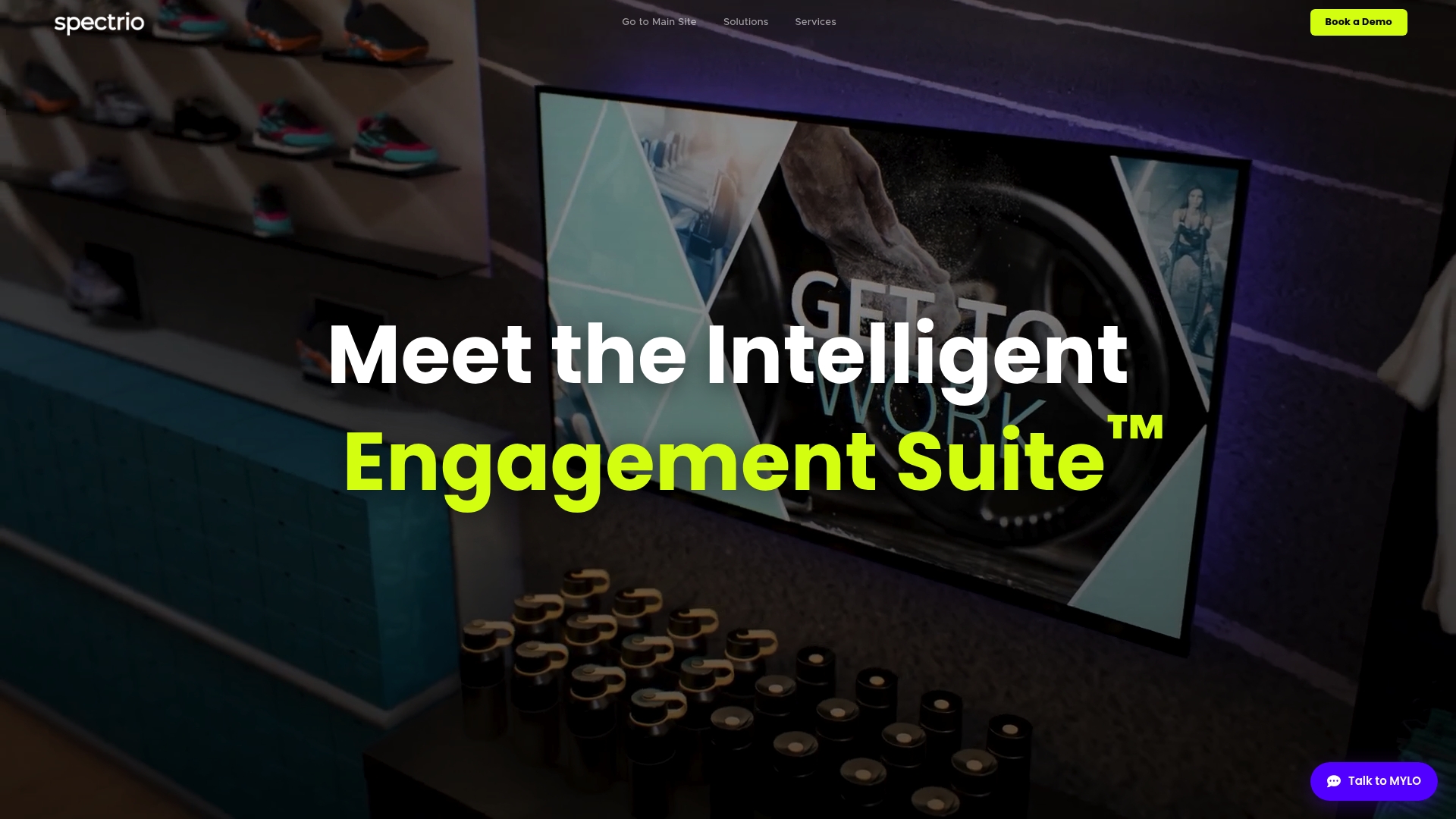
Spectrio’s Intelligent Engagement Suite™ connects digital signage, interactive kiosks, and content management tools into a single system that keeps your promotional messaging consistent from the first online impression to the in-store moment of purchase. Whether you are running a restaurant customer experience campaign or a retail flash sale, Spectrio gives you the tools to manage content playlists, measure audience engagement, and adapt your messaging in real time. Explore how Spectrio’s digital marketing solutions can amplify the promotional content you are already creating.
FAQ
What is promotional digital content?
Promotional digital content is any brand-published material designed to drive a specific commercial action, such as a purchase, sign-up, or store visit. Common formats include flash sales, BOGO offers, UGC contests, and exclusive member deals.
How much of my content should be promotional?
Industry research recommends keeping promotional posts to 20–30% of your total content mix. The remaining 70–80% should deliver educational, entertaining, or community-focused value to prevent audience fatigue.
Why do flash sales outperform standard discounts?
Flash sales create a compressed decision window through scarcity and urgency, which pushes hesitant buyers to act. A standard discount with no deadline gives buyers permission to wait indefinitely.
What makes a promotional landing page convert well?
The landing page must mirror the exact language and offer from the promotional content that drove the click. Removing unnecessary form fields, using a single call to action, and optimizing for mobile load speed are the three highest-impact improvements.
How does social proof improve promotional content performance?
Promotional content that includes customer reviews, star ratings, or before-and-after comparisons outperforms generic feature lists because it reduces perceived risk and answers the buyer’s question of “why this, why now?”