

Audio branding is defined as the intentional creation of a brand’s unique sonic identity to drive emotional engagement, improve recall, and build recognition across every customer touchpoint. Understanding how audio branding works gives marketers and business owners a measurable edge: auditory stimuli reach the brain in approximately 8–10 milliseconds, faster than visual input. That speed means sound creates an emotional impression before a customer consciously processes what they are hearing. The industry term for this discipline is sonic branding, and it goes far beyond background music or a catchy jingle.
How audio branding works: the core components
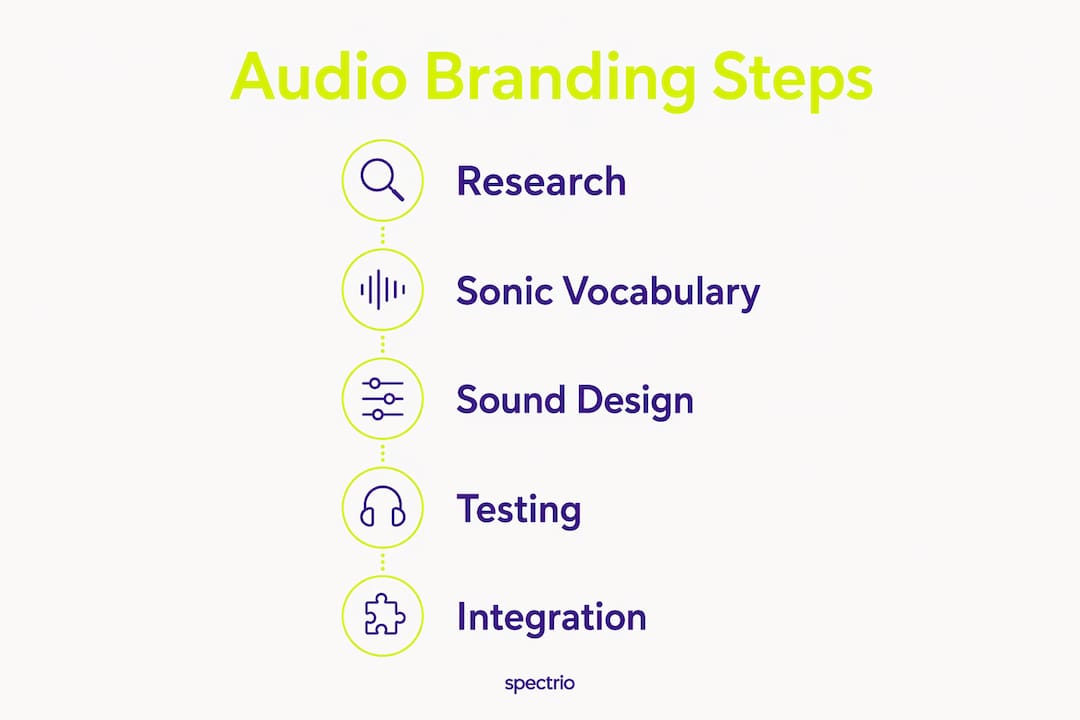
Sonic branding is a structured system, not a playlist. The foundation is a curated sonic vocabulary: a defined set of sounds, musical qualities, and audio elements that consistently express what your brand stands for. Brands using curated sonic vocabularies aligned with their positioning outperform those using generic chart music, which creates cognitive dissonance and signals interchangeability to customers.

The technical backbone of any sonic identity is musical DNA. This term refers to the specific combination of tempo, harmony, rhythm, and timbre that gives a brand its distinct sound. Musical DNA underpins scalable audio systems because it acts as a rulebook. Any new audio asset, whether a radio ad, an on-hold message, or an in-store track, can be created consistently by following those rules.
The key components of a working sonic branding system include:
- Sonic logo: A short, recognizable audio signature, typically 3–5 seconds, that functions like a visual logo for the ear.
- Hero brand track: A longer composition that captures the full emotional range of the brand, used in flagship campaigns.
- Modular sound assets: Shorter, adaptable versions of the hero track deployed across specific touchpoints such as digital ads, retail environments, and phone systems.
- Voice identity: The tone, pace, and character of any spoken brand communication, from customer service scripts to on-hold messaging.
Sound design must be treated as foundational infrastructure, integrated at the same stage as visual identity, not added as an afterthought. This means your sonic system should be defined during brand development, not retrofitted later.
Pro Tip: Test every audio asset on low-quality speakers, such as a laptop or a small Bluetooth device. If your sonic logo loses clarity or recognition at low fidelity, it will fail in real retail environments where speaker quality varies widely.
How does sound branding influence consumers emotionally?
Sound reaches the emotional centers of the brain faster than any other sensory input. That 8–10 millisecond processing window means a customer’s mood is already shifting before they read a sign or see a product. This is why repeated sonic cues strengthen memory encoding and brand distinctiveness, increasing ROI and reducing price sensitivity over time.
The mechanism is straightforward. Each time a customer hears your sonic logo or brand track, the brain reinforces the neural connection between that sound and your brand. Over repeated exposures, the sound alone triggers brand recall without any visual prompt. This is called mental availability, and it is one of the most valuable assets a brand can build.
The business case for this investment is concrete:
Ads with consistent sonic brand cues are 8.53 times more effective at driving branded attention than creatives without audio identity, producing a 25.3% sales uplift in retail environments. These figures show that sonic branding is not a creative luxury. It is a performance driver with measurable revenue impact.
That 25.3% sales uplift is not a soft metric. It connects directly to revenue, making sonic branding one of the highest-ROI investments available to retail marketers. The power of storytelling in brand engagement follows the same principle: when emotional cues are consistent and intentional, they compound over time into genuine brand loyalty.
What is in-store audio marketing and how should you apply it?
In-store audio marketing is the deliberate use of music, messaging, and sound design inside a physical retail environment to shape customer behavior and reinforce brand identity. It is one of the most underused performance channels in retail, despite the fact that 85–90% of consumer transactions still occur in physical stores. That concentration of purchase decisions makes the in-store environment the highest-stakes touchpoint a brand controls.
The role of audio branding in retail goes beyond atmosphere. When treated as a media channel with accountability, in-store audio delivers measurable results. Closed-loop reporting connecting POS data to in-store audio platforms lets brands measure incremental return on ad spend and attribute results at the store level. That is the same standard of accountability marketers expect from digital advertising.
Here are the best practices for implementing audio branding in a retail or physical environment:
- Define your sonic vocabulary first. Before selecting any music, document the tempo range, instrumentation, and emotional tone that match your brand positioning.
- Limit promotional messaging. Promotional audio capped at 4–4.5 minutes per hour preserves the customer experience by keeping music as the primary atmosphere driver, not advertising.
- Use dynamic and localized content. AI-driven audio platforms can adjust messaging by store location, time of day, or inventory levels, making your audio as targeted as a digital campaign.
- Integrate with POS data. Connect your audio platform to sales data so you can measure which messages drive conversion and which create friction.
- Treat volume as a brand decision. Volume levels affect how customers perceive your brand. Too loud signals aggression; too quiet signals neglect. Set volume standards as part of your brand guidelines.
Spectrio’s in-store media solutions help brands apply these practices at scale, connecting audio content to measurable business outcomes across multiple locations.
Common misconceptions about how sonic branding works
The most damaging misconception is that audio branding means picking a good playlist. A playlist is a collection of songs. A sonic identity is a system. These are fundamentally different things, and confusing them costs brands real money.
The common pitfalls that undermine audio branding efforts include:
- Using popular chart music without curation. Generic hits create no brand association. Worse, they can signal that your brand has no distinct identity, which undermines premium positioning.
- Inconsistency across touchpoints. A brand that sounds energetic in-store but formal on hold sends conflicting signals. Cognitive dissonance between sound and brand identity erodes trust.
- Treating audio as decoration. Sound added after the fact, without strategic intent, rarely aligns with brand values. It fills silence without communicating anything.
- Ignoring measurement. Audio branding without performance data is guesswork. Brands that do not track results cannot refine their approach or justify the investment.
True audio branding requires a curated sonic vocabulary built around brand positioning, not popularity. The goal is differentiation, not familiarity. A brand that sounds like every other brand in its category has failed at sonic branding, regardless of how good the music is.
Pro Tip: Audit your current in-store or on-hold audio against your brand values. If you cannot explain why each track or message was chosen, your audio is not branded. It is just noise.
Learning how to build a brand identity with consistency across channels applies directly here. The same discipline that governs visual identity must govern sound.
Spectrio’s perspective on audio branding as a strategic asset
Working with brands across industries, the pattern is clear: the businesses that treat audio as an afterthought are the ones that struggle to build emotional loyalty. The ones that invest in a defined sonic system, tested and measured, consistently outperform their peers on customer retention and brand recall.
The mistake I see most often is treating the sonic logo as the whole strategy. A logo is a symbol. A system is what makes the symbol mean something. The brands that get this right build their musical DNA before they produce a single asset. They define the emotional territory their sound will own, then they build everything from that foundation.
Data-driven iteration is what separates mature sonic strategies from one-time creative projects. Your audio identity should be reviewed and refined on a regular cycle, the same way you review campaign performance. Keeping it fresh while staying consistent is not a contradiction. It is the discipline that keeps a brand relevant without losing recognition.
The future of in-store audio is procedural: platforms that connect POS data to audio content delivery, so every message is accountable and every sound decision is informed by real customer behavior. That is the standard Spectrio builds toward, and it is the standard every serious marketer should demand.
— Spectrio
How Spectrio brings audio branding to life across your locations
Spectrio’s Intelligent Engagement Suite™ gives brands the tools to build and deploy a sonic identity that works across every customer touchpoint, from in-store environments to on-hold messaging.

Spectrio integrates audio content with audience measurement and closed-loop reporting, so you can connect sound decisions to sales outcomes. Whether you are building a sonic identity from scratch or scaling an existing one across dozens of locations, Spectrio provides the content, the technology, and the account support to make it work. Explore Spectrio’s voice talent and music demos to hear what a branded audio experience sounds like in practice, or see how digital signage and audio work together to create a complete in-store brand experience.
Key takeaways
Audio branding works by building a structured sonic system grounded in musical DNA, deployed consistently across touchpoints, and measured against real business outcomes like sales uplift and brand recall.
| Point | Details |
|---|---|
| Sound is faster than sight | Auditory stimuli reach the brain in 8–10 ms, creating emotional impact before conscious processing begins. |
| Musical DNA drives consistency | Defining tempo, rhythm, harmony, and timbre gives every audio asset a shared identity across all channels. |
| In-store audio is a performance channel | Connecting POS data to audio platforms enables store-level ROI measurement, not just atmosphere management. |
| Limit promotional messaging | Keeping promotional audio to 4–4.5 minutes per hour protects the customer experience and brand atmosphere. |
| Measurement separates strategy from noise | Brands that track audio performance can refine their sonic identity and justify the investment with real data. |
FAQ
What is audio branding?
Audio branding, also called sonic branding, is the strategic creation of a brand’s unique sound identity using elements like a sonic logo, musical DNA, and curated audio assets to drive recognition and emotional engagement across all customer touchpoints.
How does audio branding increase sales?
Ads with consistent sonic brand cues are 8.53 times more effective at driving branded attention than those without, producing a 25.3% sales uplift in retail environments, according to research on sonic branding effectiveness.
Why does consistent audio branding matter?
Repeated exposure to the same sonic cues strengthens memory encoding and brand distinctiveness, which reduces price sensitivity and increases customer loyalty over time.
How much promotional audio should play in a store?
Best practice limits promotional messaging to approximately 4–4.5 minutes per hour, keeping music as the primary atmosphere driver and preventing customer fatigue from excessive advertising.
What is the difference between a playlist and a sonic identity?
A playlist is a collection of songs chosen for general appeal. A sonic identity is a defined system of audio elements, built around brand values and musical DNA, that communicates a specific brand message consistently across every touchpoint.